Press ESC to close

49 tutorials

Free tutorials

Step-by-step drawing tutorials in pencil, on a graphics tablet, in Photoshop and Procreate. Each one covers a single subject — a face, eyes, lips, a figure, a house — from the first line to a finished piece. All free, no sign-up.

Popular

How to learn to draw

How to learn to draw

Learning to draw starts not with drawings but with the hand: line pressure, hatching, gradient, filling shapes. Then simple forms, perspective and light and shade come in. The text has a plan for the first month and the exercises that fit into it.

September 6, 202668.2K23 min
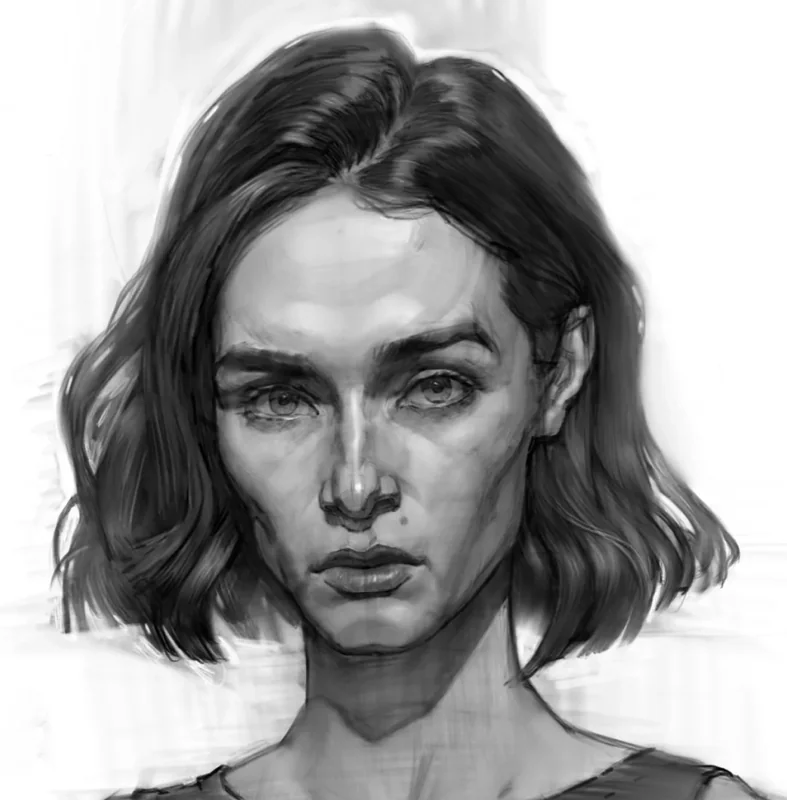
How to draw a person's face

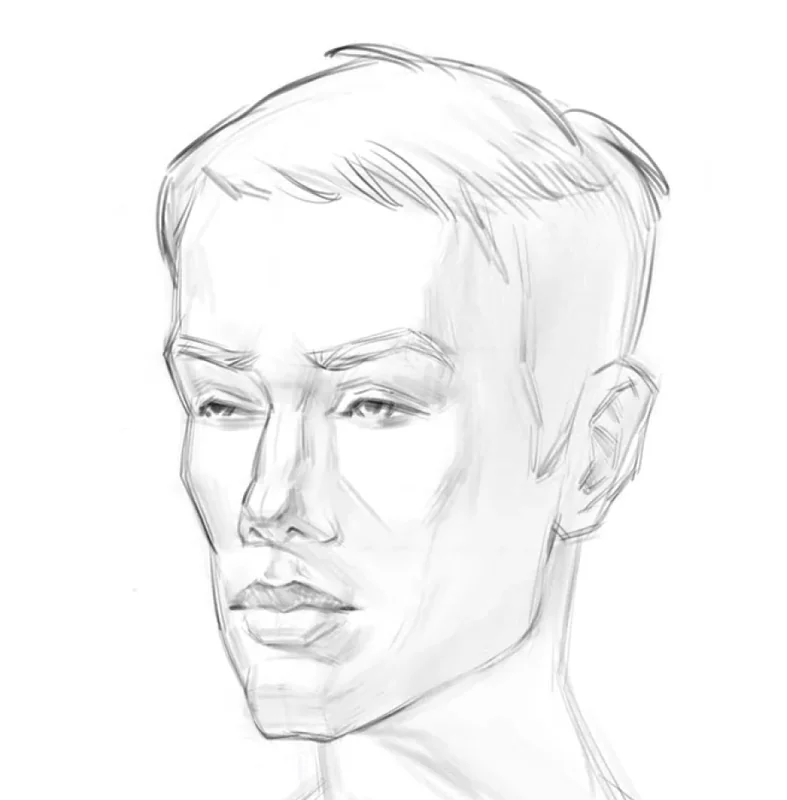
How to draw a person's face

A face is built on proportion: the eye line divides the head in half, and from it you find the places of the nose, mouth and ears. Two walkthroughs, a portrait front on and at three quarters, with the helper shapes that keep the axes from drifting on a turn.

September 6, 202671.8K6 min
Drawing with a pencil for beginners: Step by step to mastery

Drawing with a pencil for beginners: Step by step to mastery

The order of the first sessions is line, hatching, value, proportion, composition, perspective. What to draw with and how to hold the pencil, then step-by-step exercises for each block. Your first pencil drawing comes out along the way.

September 6, 202657K8 min
Chiaroscuro in drawing

Chiaroscuro in drawing

Light and shade is six gradations on a form: light, halftone, core shadow, reflected light, cast shadow and highlight. The work goes from the overall value mass to detail. The value gradient, the laws of shading and a step-by-step study on a sphere and on more complex objects.

September 6, 202665.3K10 min
How to learn to draw on a tablet. Tips and lessons for beginners

How to learn to draw on a tablet. Tips and lessons for beginners

A graphics tablet is chosen for your hand and your eyes, not for its spec sheet — the school curators compare the brands and say what to look at. Then the software, getting used to your hand and the image being in different places, and exercises for coordination.

September 6, 202634K6 min
Human anatomy in drawing

Human anatomy in drawing

An artist needs load-bearing anatomy: the bones you can see under the skin and the muscles that change the silhouette. You start with the skeleton, then the axes and planes of the body, the proportions of its sections and the principle of simplification. Plus the usual mistakes, including learning anatomy without drawing.

September 6, 202651.8K9 min
How to draw hair with a pencil

How to draw hair with a pencil

Hair is drawn in large masses and strands that follow the direction of growth and the shape of the skull. First the overall mass of the hairstyle, then a mid tone, then light and shadow, then the architecture of the strands — and only at the end the individual locks where the form breaks.

September 6, 20261.2K6 min
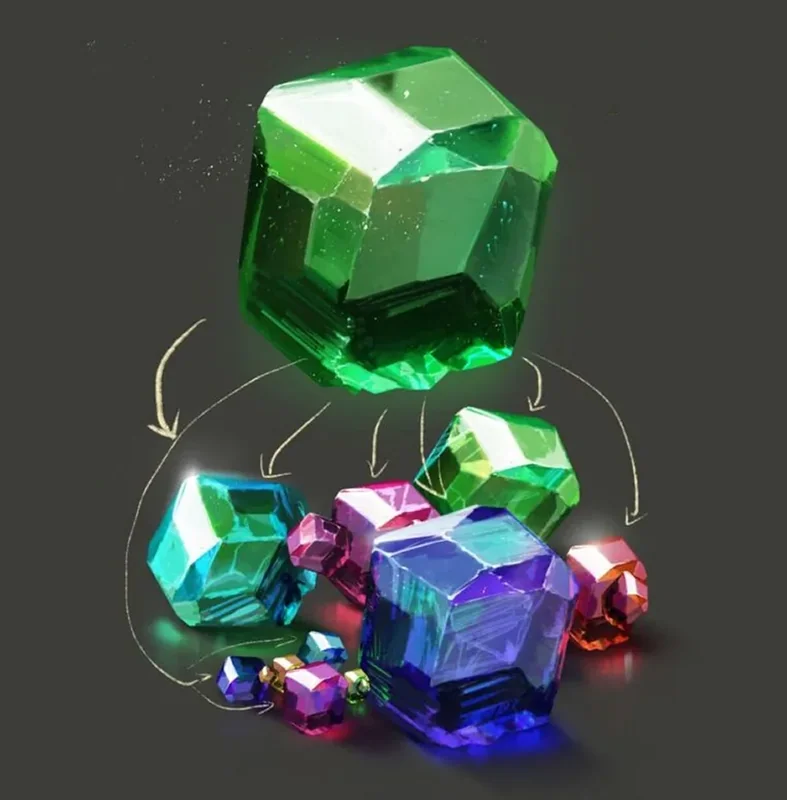
How to draw a crystal. Step-by-step guide for artists

How to draw a crystal. Step-by-step guide for artists

Before you draw a crystal, settle on the form — flat-faced, curved-faced, natural with cracks, or a cluster grown together. Then the faces are separated by value with gradients and blend modes, and the transparency comes from light passing through and flaring on the far side.

September 6, 202644K3 min
Learning to draw glow

Learning to draw glow

Glow is made with gradients and blend modes, not by lightening the object itself. Choosing colours for the core and the halo, brushes for soft light, layer setup — and how the glow should change the colour of everything around it.

September 6, 202637.9K3 min
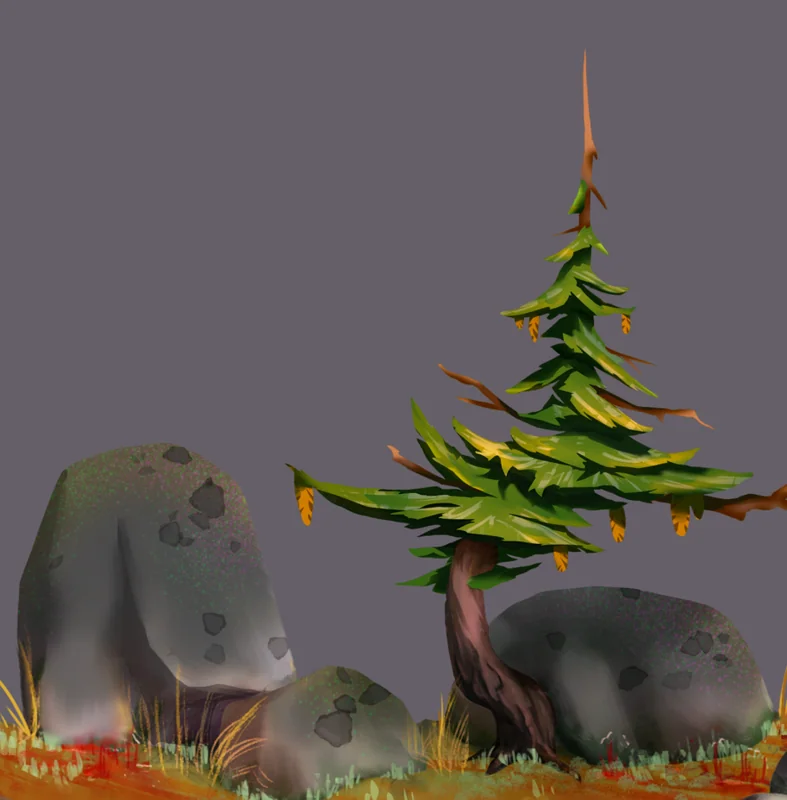
Drawing stones

Drawing stones

To draw a rock you go from silhouette and large planes — form first, then shadows, then the texture of the surface and the work with hues. Cliffs, rock piles and canyons are assembled from this, and natural backgrounds in concept art from those.

September 6, 202647.1K4 min
Color in digital painting

Color in digital painting

Working with colour goes in four steps: analysing references, a black-and-white sketch, colour blocking, detailing. Value first, colour second — that way the palette is built deliberately rather than guessed at the end.

September 6, 202637.4K17 min
How to draw basic emotions

How to draw basic emotions

There are six basic emotions — joy, sadness, anger, surprise, fear, disgust. For each one you see what happens to the brows, the eyes and the mouth. Why a character in a book, a game or an animation needs emotion, and how to draw them without sliding into identical grimaces.

September 6, 202648.7K11 min
How to draw silhouettes: basics, tricks and step-by-step lesson

How to draw silhouettes: basics, tricks and step-by-step lesson

The silhouette decides whether your character is recognised. If it does not read as a black shape, detail will not save it — so you start with masses, rhythm and negative space, and the line comes last. A character silhouette is drawn step by step from a geometric base.

September 6, 202645.3K11 min
How to draw teenagers

How to draw teenagers

Between ten and eighteen the figure changes fast: the proportions have left childhood but have not reached adulthood — a thin neck, narrow shoulders, long limbs on a small body. The silhouette, the face and the poses typical of that age.

September 6, 202639.5K10 min
How to draw a child?

How to draw a child?

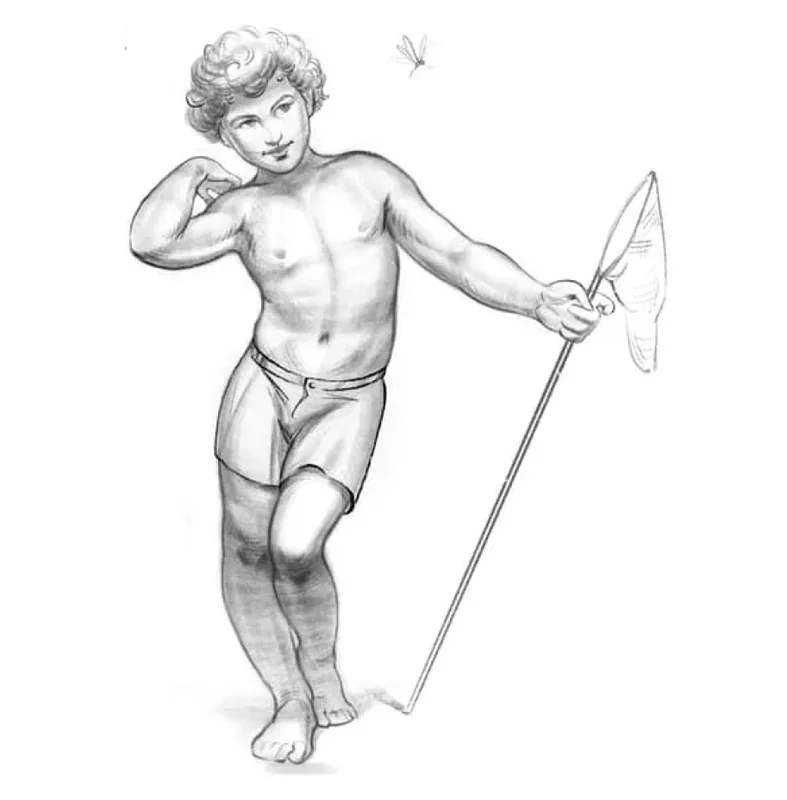
A child works to different arithmetic: the head takes up a larger share of the figure, the cranium is bigger than the face and the limbs are shorter against the body. How to draw a small child full length and as a portrait, from the overall mass to the features.

September 6, 202638.9K8 min

You may also like

Texture and finish in the drawing

Texture and finish in the drawing

Surface quality is the character of the material itself; texture is the pattern on it. How to convey wood, metal, fabric, glass and skin with stroke and mass, how matte differs from glossy, how to draw transparency and how surface works in a composition.

September 6, 202643.3K6 min
How to understand that the work is completed?

How to understand that the work is completed?

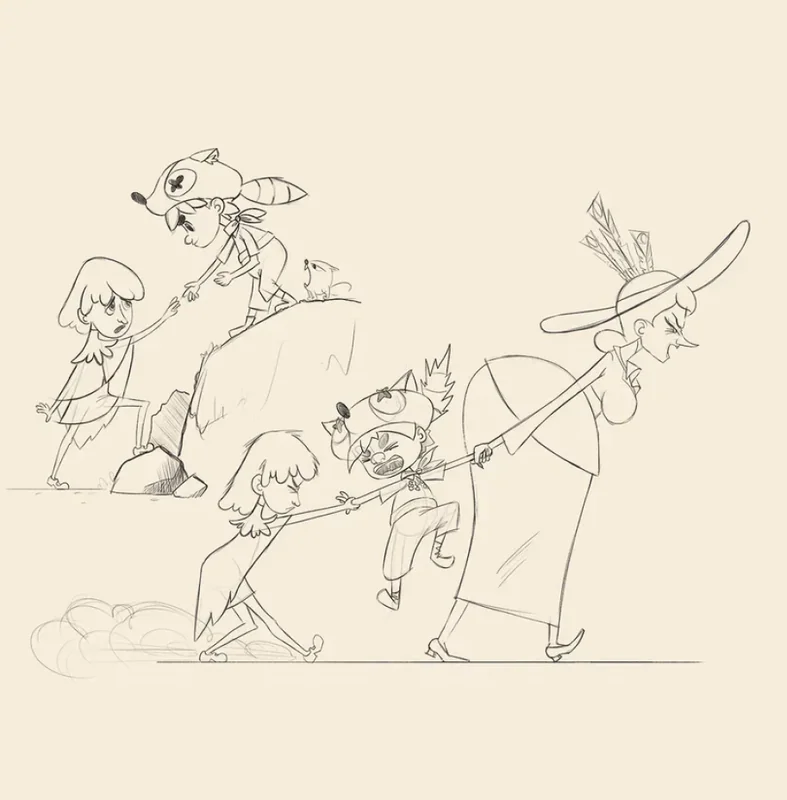
Alexandra Tarnavskaya answers with a five-point checklist. The piece holds the chosen style, fits the deadline, the composition is resolved, the execution matches the skill you have today — and you stopped before you started reworking it in circles.

September 6, 202644K4 min
GameDev. Who are you?

GameDev. Who are you?

A game runs from idea and prototype to release and support, and each stage brings in its own people: concept artist, 3D and 2D artists, animator, sound designer, game designer, programmer. Who is responsible for what and when they join.

September 6, 202631K27 min
Drawing faces of people of different ages

Drawing faces of people of different ages

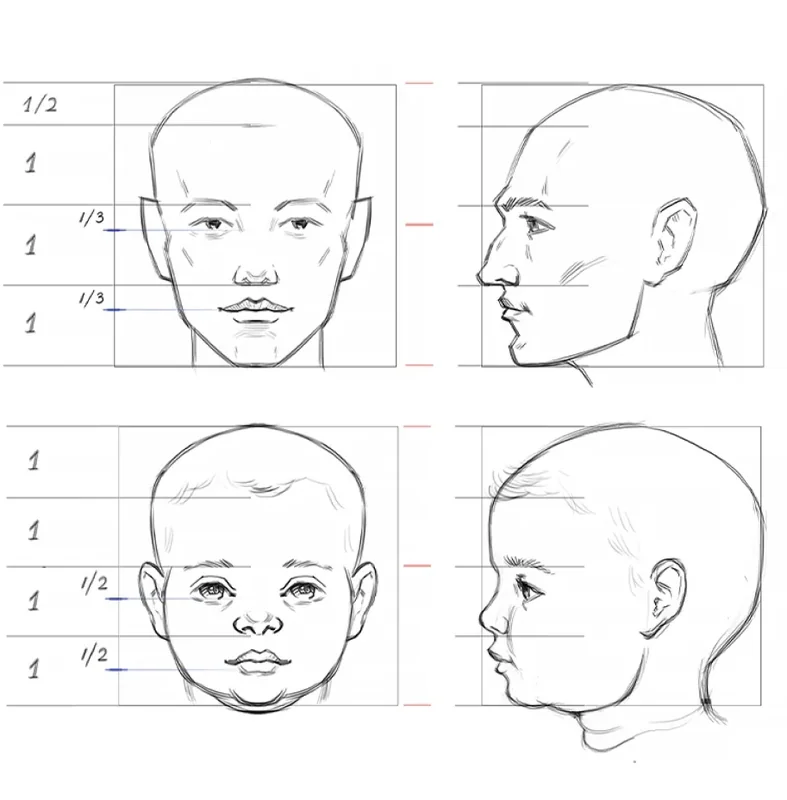
The reference point is an adult face of 20 to 40: from twenty the proportions of the skull no longer change. Other ages are counted from there. A child has a larger cranium and a smaller face; in an older person the soft tissue changes, not the bone. Anton Korostov works through four portraits.

September 6, 202636.4K9 min
A cool and recognizable character — what is he like?

A cool and recognizable character — what is he like?

A recognisable character rests on three things: a silhouette that reads as a black shape, its own colour pairing and one or two signature details. The test is simple — fill the character in solid, and if people still know who it is, the silhouette works.

September 6, 202625.3K2 min
How to get the most out of Skills Up School courses?

How to get the most out of Skills Up School courses?

A couple of hours of preparation changes the whole course. Decide what you want from it, try the tools with your hands, match your goals against the programme, give yourself permission to make mistakes — and get a proper rest before you start. Five pieces of advice gathered over seven years of teaching.

September 6, 202617.3K3 min
Useful hotkeys in Photoshop

Useful hotkeys in Photoshop

Evgenia Chernova shows five commands worth putting on your own Photoshop shortcuts. Flip the canvas, convert the piece to black and white, lock a layer's pixels, open a duplicate window and call up smudge — with the settings path for each one.

September 6, 202628.3K2 min
Where is applied drawing used?

Where is applied drawing used?

Applied drawing differs from academic drawing by its task: it is always made for a specific product — a game, an animation, a comic, an ad, industrial design. Where it is needed today and what each field expects from an artist.

September 6, 202620.4K3 min
8 tips for beginners in Zbrush

8 tips for beginners in Zbrush

Eight places where a ZBrush beginner gets stuck on flat ground. The object will not edit, stray bodies hang in the scene, the model looks smooth at a low polygon count, the form goes doughy. The school curators explain which key fixes each case and why some actions cannot be undone.

September 6, 202626.4K2 min
Time management for an artist

Time management for an artist

Time runs short not because there is too little of it but because of how attention is spread. Anna Vinokurova describes how to build a practice around a job and a family — in short sessions, without heroics and without burnout.

September 6, 202618.1K3 min